



Ultimate Guide to Sport Fishing Methods in Uganda
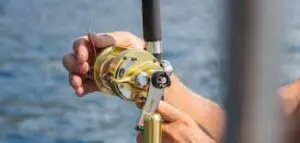
Mastering the diverse Sport Fishing Methods in Uganda is the key to conquering the country’s legendary waters and landing world-class trophy catches. Depending on your target destination, anglers can switch between high-speed trolling with deep-diving plugs across the open expanses of Lake Victoria, or shore casting with heavy metal spoons into the turbulent, white-water eddies of Murchison Falls. For those seeking the ultimate thrill, alternative techniques like live-baiting with distressed Tilapia or stripping flashy streamers on heavy-duty fly gear offer highly effective ways to trigger aggressive strikes from monster Nile Perch and fierce Tigerfish.
Uganda is one of Africa’s premier angling destinations. The country boasts vast lakes, rushing rivers, and massive river monsters. To land these legendary fish, you must master specific techniques. This comprehensive guide covers everything you need to know about Sport Fishing Methods in Uganda. Whether you hunt 200-pound Nile Perch or fierce Tigerfish, the right approach changes everything.
Planning a trip can be complex. For the ultimate experience, booking with experienced operators like Peter’s Fishing Tours ensures you access top waters with premium gear. Partnering with a dedicated agency like Uganda Fishing Tours streamlines your logistics, permits, and park access. Let us dive into the exact tactics used to conquer Uganda’s wild waters.
The Evolution of Angling in East Africa
Sport fishing in East Africa has changed dramatically over the decades. Historically, local communities relied on handlines, longlines, and papyrus reeds for sustenance. Today, the focus has shifted toward conservation and high-performance angling. Modern Sport Fishing Methods in Uganda combine advanced technology with deep ecological respect.
Anglers now use high-carbon rods, specialized multipliers, and multi-frequency fish finders. This evolution has turned locations like Murchison Falls and Lake Victoria into world-class trophy waters. Operators like Peter’s Fishing Tours have led this transition by introducing catch-and-release practices. Consequently, monster fish populations remain healthy for future generations. When booking through Uganda Fishing Tours, you experience a perfect blend of modern angling technology and pristine African wilderness.
Primary Target Species and Habitat Matching
Understanding your target species is critical before choosing your gear. Different fish require entirely different Sport Fishing Methods in Uganda. Matching your tactic to the specific habitat guarantees better hook-up rates.
Nile Perch (Lates niloticus)
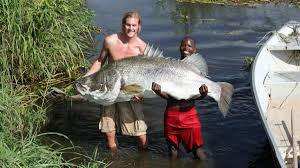
The undisputed king of Ugandan waters is the Nile Perch. These apex predators thrive in oxygen-rich, turbulent waters as well as deep lake structures. Because they grow to massive proportions, they demand heavy-duty tackle. To target them effectively, look at specialized itineraries from Uganda Fishing Tours that focus on river channels and drop-offs.
Tigerfish (Hydrocynus vittatus)
Tigerfish are pure adrenaline. Packed with razor-sharp teeth and aggressive tendencies, they love fast-moving currents. They strike hard and leap frequently, meaning your Sport Fishing Methods in Uganda must account for wire leaders and lightning-fast hooksets. Peter’s Fishing Tours frequently guides anglers to specific river stretches where these fierce predators hunt in packs.
Tilapia and Catfish Species
While Nile Perch take the spotlight, Tilapia and Catfish offer incredible sport on lighter tackle. Tilapia thrive in shallow, reedy bays and require delicate presentations. Conversely, heavy Catfish hide in muddy river bottoms and deep holes. Targeting these varied species requires diverse knowledge, which is why traveling with Uganda Fishing Tours provides such a well-rounded angling portfolio.
Heavy-Duty Trolling Techniques
Trolling is arguably the most productive of all Sport Fishing Methods in Uganda when targeting trophy Nile Perch on open water. It allows you to cover vast areas of water while maintaining your lure at a precise depth.
Equipment Profiles
For successful trolling, your gear must be flawless. Use short, powerful trolling rods rated between 50 to 80 pounds. Pair these with high-capacity conventional multiplier reels spooling at least 80-pound braided mainlines. A braided line provides zero stretch, offering immediate hook penetration when a giant fish strikes.
Lure Selection and Depth Management
Deep-diving hard baits are the standard standard choice. Brands like Rapala (specifically the Super Shad Rap and Magnum series) are legendary in these waters. Color choices matter; use bright firetiger patterns in murky river water and natural silver or blue hues in clear lake environments. Managing your depth involves adjusting your boat speed—typically between 2 to 4 knots—and altering the distance of the line behind the boat.
Boat Maneuvering and S-Curves
Driving in a straight line is a common mistake. Experienced skippers from Peter’s Fishing Tours utilize S-curve driving patterns. This technique causes the inside lures to sink and slow down, while the outside lures speed up and rise. This sudden change in action frequently triggers aggressive reaction strikes from trailing Nile Perch.
When you book an excursion via Uganda Fishing Tours, your boat will be equipped with specialized rod holders and electronics designed specifically for this high-yield method.
Live Bait Fishing (Live Baiting)
When artificial lures fail, live baiting becomes the most reliable of all Sport Fishing Methods in Uganda. Big fish eat big bait, and nothing excites a monster Nile Perch like a distressed Tilapia.
Collecting and Maintaining Live Bait
Your fishing day begins by catching the bait itself. Anglers typically use light spinning rods with small hooks or cast nets to catch Tilapia in shallow bays. Keeping the bait alive is paramount. The vessels used by Peter’s Fishing Tours feature dedicated oxygenated livewells to ensure your bait stays strong, active, and highly attractive to predators throughout the day.
Rigging Methods: Lip vs. Dorsal Hooking
How you rig the bait depends entirely on your presentation strategy:
-
- Lip Hooking: Best for slow trolling or drifting through river currents. It allows the Tilapia to swim forward naturally against the flow.
- Dorsal Hooking: Ideal for stationary fishing or suspended float rigging. This method causes the fish to swim downward, sending intense distress vibrations directly into deep pools.
Managing the Free-Spool and Drag Settings
When a monster Perch takes a live bait, it often turns it around to swallow it head-first. For this reason, you must fish with a totally free spool or a highly sensitive clicker system. If the fish feels early resistance, it will drop the bait immediately. Experts from Uganda Fishing Tours advise waiting a few critical seconds before engaging the drag and setting the hook hard into the fish’s bony jaw.
Casting and Spinning from Shore or Boat
Casting heavy artificial lures requires physical endurance, but it offers unmatched excitement. It remains one of the most interactive Sport Fishing Methods in Uganda.
Rod and Reel Synergy
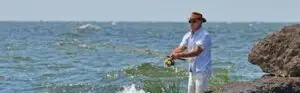
You need a stiff spinning rod between 8 to 9 feet long, capable of casting lures weighing up to 4 ounces. Pair this rod with a durable 8000 to 10000 size spinning reel. A high drag capacity—minimum 30 pounds—is mandatory to stop fish from heading straight into underwater rocks.
Lure Variations: Plugs, Spoons, and Bucktail Jigs
-
- Heavy Plugs: Excellent for creating surface commotion or diving deep into rocky structures.
- Large Metal Spoons: Highly effective in heavy river currents because they cast long distances and slice cleanly through fast water.
- Bucktail Jigs: A secret weapon used by Peter’s Fishing Tours. Bouncing a heavy white jig along the river bottom imitates dying baitfish perfectly.
Reading River Structures and Eddies
Success with this method depends on your ability to read the water. Do not cast blindly into the middle of fast currents. Instead, target the edges of swirling eddies, deep pools behind large boulders, and white-water bubbles. Nile Perch hide in these calmer pockets, waiting to ambush prey washed down by the river. Booking through Uganda Fishing Tours gives you access to professional guides who know every hidden rock and ambush point along the riverbank.
Fly Fishing for Freshwater Giants
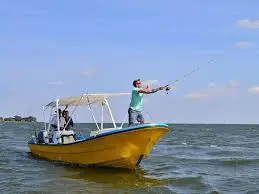
Fly fishing is the ultimate test of skill among all Sport Fishing Methods in Uganda. It requires specialized casting techniques and heavy fly tackle to land massive river fish.
Rod Weights and Line Configurations
Forget traditional trout gear. For Ugandan waters, you need a 9-weight to 12-weight fly rod. Your fly line selection must match your specific environment:
-
- Sinking Tropical Lines: Essential for getting your fly down into deep, fast river currents.
- Floating Tropical Lines: Perfect for casting surface poppers to aggressive Tigerfish along reed lines.
Fly Selection: Streamers and Poppers
Large baitfish imitations, such as Whistlers, Deceivers, and Zonkers tied on extra-strong 4/0 hooks, are standard for Nile Perch. For Tigerfish, use brightly colored streamers with plenty of flash material. When fishing at the surface, heavy foam poppers create a loud chugging sound that drives predators crazy.
Stripping Techniques and Wire Leader Integration
Tigerfish possess razor-sharp teeth that slice through mono or fluorocarbon instantly. Therefore, integrating a short multi-strand wire leader is essential. When retrieving your fly, avoid trout-style strips. Use a fast, two-handed strip to simulate a panicked, escaping baitfish. The guides at Peter’s Fishing Tours can assist you in rigging these complex leaders properly, ensuring your fly stays connected to the fish.
Geographical Variations in Fishing Methods
The diversity of Uganda’s geography means that Sport Fishing Methods in Uganda must change depending on your exact location.
Murchison Falls National Park
The Victoria Nile below Murchison Falls is characterized by fast currents, white water, and rocky banks. Here, trolling is limited by underwater hazards. Instead, shore casting with heavy spoons and live baiting in deep pools are the dominant Sport Fishing Methods in Uganda.
The rocky terrain can be physically demanding. For safety and positioning, working with Peter’s Fishing Tours ensures you fish from the safest, most productive rocky ledges.
Lake Victoria (Entebbe and the Ssese Islands)
Lake Victoria offers an entirely different environment. This massive inland sea features deep open water, shallow bays, and submerged structures. Deep-water trolling with large spreads is the primary method used here.
Anglers often utilize planer boards and downriggers to target fish at various depths. Organizing your trip through Uganda Fishing Tours connects you with large, twin-engine boats perfectly suited for navigating these expansive open lake waters.
Seasonality, Water Hydrology, and Angling Success
Even the best techniques will fail if your timing is wrong. Understanding how seasons affect Sport Fishing Methods in Uganda is vital for a successful trip.
The Impact of Rainy Seasons on Visibility
Uganda experiences two distinct rainy seasons: from March to May and from September to November. Heavy rains wash topsoil into the river systems, causing high turbidity and low water visibility. During these muddy phases, visual Sport Fishing Methods in Uganda—like fly fishing or casting clear artificial plugs—become far less effective. Instead, you must switch to highly vibrant lures, rattling baits, or scent-heavy live bait presentations.
Dry Season Advantages
The dry months from December to February and June to August offer premium angling conditions. Water levels drop, clarity improves, and fish concentrate in predictable deep pools and main river channels. Because the fish are active and tightly grouped, all major Sport Fishing Methods in Uganda become highly productive.
To secure prime dates during these peak seasons, it is smart to coordinate well in advance with Uganda Fishing Tours and lock down your preferred vessel with Peter’s Fishing Tours.
Sustainable Angling and Conservation Ethics
As sport fishing grows in popularity across East Africa, practicing sustainable methods is essential to preserve these unique fisheries. Protecting the environment ensures these pristine destinations thrive for years to come.
Catch-and-Release Protocols for Massive Perch
Landing a 150-pound Nile Perch takes a heavy physical toll on the fish. Proper handling is critical for its survival:
-
- Support the Body: Never lift a large fish vertically by its jaw. This can cause fatal internal damage. Keep the fish horizontal in the water whenever possible.
- Minimize Air Exposure: Keep the fish submerged while preparing your camera gear.
- Revive Patiently: Hold the fish facing directly into the current until it regains its strength and swims away on its own.
Barbless Hooks and Single-Hook Conversions
Many hard baits come standard with multiple treble hooks, which can cause severe damage to a fish’s mouth and eyes. Responsible charters, including Peter’s Fishing Tours, recommend replacing these trebles with single barbless hooks. This small adjustment makes unhooking fast and safe, dramatically improving post-release survival rates.
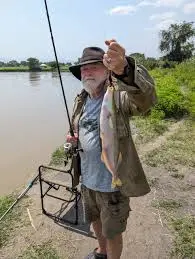
Supporting Local Communities
Sustainable sport fishing provides an economic alternative to illegal netting and overfishing. By booking your safaris with local operators like Uganda Fishing Tours, your travel dollars directly support park rangers, community conservation initiatives, and local fishing guides. This gives local communities a powerful financial incentive to protect their waters and preserve giant fish stocks.
Planning Logistical Needs for a Ugandan Fishing Safari
Organizing an international angling expedition requires careful planning and local expertise. Managing your logistics beforehand prevents unexpected delays during your trip.
Permits and Regulations
Fishing within protected areas, such as Murchison Falls National Park, requires specialized daily sport fishing permits issued by the Uganda Wildlife Authority (UWA). These permits are strictly managed to avoid overcrowding on the riverbanks. When you arrange your itinerary with Uganda Fishing Tours, all park entries, boat fees, and angling permits are secured automatically before you arrive.
Packing Essentials for the Tropics
The Ugandan sun is intense, and river environments can be harsh. Be sure to pack:
-
- Polarized sunglasses to spot shallow rocks and fish movements.
- Lightweight, long-sleeved UPF 50+ clothing.
- Heavy-duty sunblock and high-quality insect repellent.
- A sturdy, waterproof dry bag for your cameras and electronics.
Tailored Itineraries
A successful trip combines top-tier guiding with comfortable accommodations. For a seamless experience, combine the on-water mastery of Peter’s Fishing Tours with the comprehensive travel planning of Uganda Fishing Tours. They can handle your local transport, coordinate domestic flights, and book premium safari lodges near the water. This comprehensive support leaves you free to focus entirely on mastering the premier Sport Fishing Methods in Uganda and landing the catch of a lifetime.
Frequently Asked Questions
What is the single best sport fishing method in Uganda for giant Nile Perch?
For sheer numbers and consistency on large lakes, deep-water trolling with large diving plugs is highly effective. However, if you are looking for monster fish in river systems like Murchison Falls, live baiting with large Tilapia in deep pools yields the biggest trophy catches.
Do I need to bring my own rods and reels to Uganda?
While you can bring your favorite personal gear, it is not mandatory. Premium operators like Peter’s Fishing Tours supply heavy-duty rods, high-capacity reels, and proven local lures specifically chosen to handle large river monsters.
Can I try multiple sport fishing methods in Uganda on a single trip?
Absolutely. A well-planned itinerary through Uganda Fishing Tours allows you to spend a few days trolling open lake waters before heading inland to cast heavy lures and fish live bait within fast river currents.