



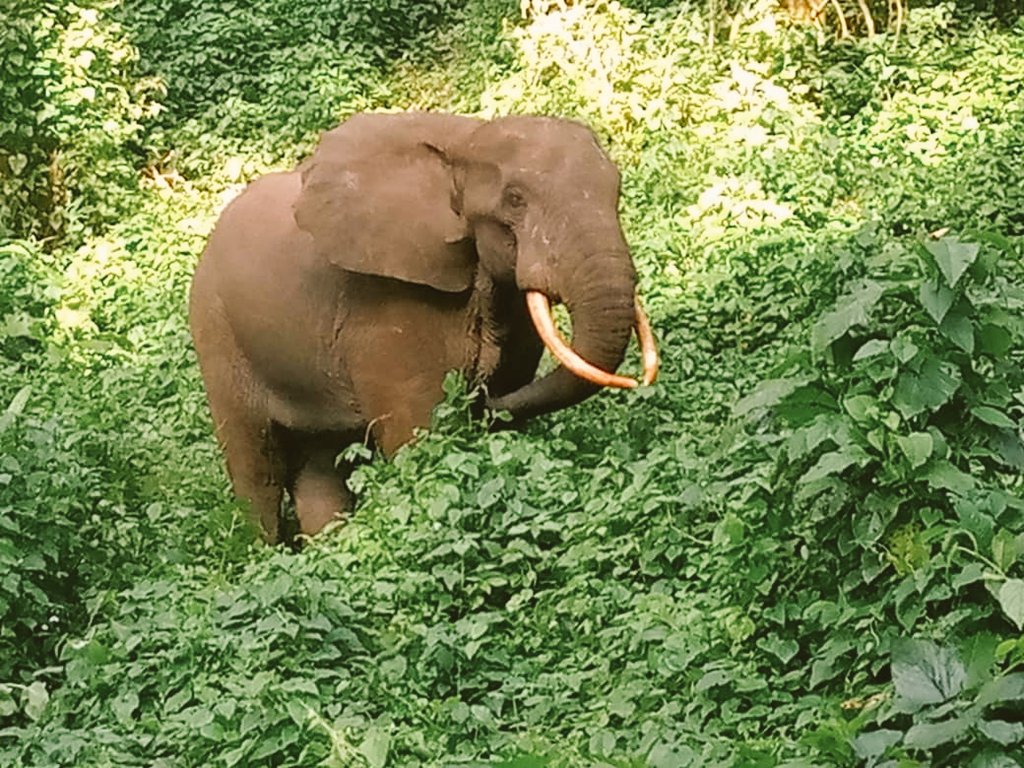
Kibale Forest Elephants: Why They Always Visit Little Monkey Camp
Kibale Forest Elephants at Little Monkey Camp
A Rare Wildlife Experience
Little Monkey Camp guests often watch Kibale Forest elephants walk past the camp. These smaller rainforest elephants follow natural wildlife corridors and feed in the lush vegetation nearby. Moreover, the camp’s eco-friendly design preserves their ancient routes, allowing peaceful encounters and unforgettable wildlife viewing from the tents.
Kibale’s Hidden Giants
Deep in Uganda’s Kibale National Park, chimpanzees dominate the canopy while elusive forest elephants roam beneath ancient trees. Although the park hosts thirteen primate species, these shy giants remain one of its best-kept secrets.
Why They Visit Little Monkey Camp
For years, spotting forest elephants depended on luck because they avoided people and blended into dense vegetation. However, Little Monkey Camp sits beside an ancestral migration corridor, making elephant sightings far more frequent. Therefore, visitors enjoy a unique opportunity to observe them near the lodge.
What Makes Forest Elephants Different
Forest elephants differ from savanna elephants in size and appearance. They stand 2–2.5 meters tall, have straighter tusks, oval ears, and darker, hair-covered skin. In addition, they travel in small family groups, making them quieter and harder to track.
Ancient Routes and Safe Passage
Elephants rely on memory and repeatedly use safe migration paths. Consequently, matriarchs lead their families along the same routes every season. Because Little Monkey Camp preserved natural vegetation and avoided barriers, the elephants continue crossing the area.
Mineral-Rich Resources
Besides tradition, nutrition attracts elephants to the camp’s surroundings. Heavy rainfall removes essential minerals from rainforest plants, so elephants seek mineral-rich clay, mud wallows, and water sources. Therefore, the valley near the camp provides an important feeding and replenishment site.

Mineral-Rich Feeding
When elephants approach the camp, they actively dig clay with their feet and tusks; consequently, they consume minerals that neutralize plant toxins.
Mud Wallows and Protection
Additionally, elephants cover their bodies with mud because it repels insects and reduces heat; therefore, they return to these wallows daily.
Seasonal Foraging Patterns
Forest elephants eat fruits, leaves, roots, and bark; however, they seek seasonal foods that provide greater energy and nutrition.
Forest Edge Advantage
Moreover, the forest edge receives more sunlight, encouraging wild ginger, bananas, and grasses; consequently, elephants regularly forage in these areas.
Efficient Feeding Strategy
During rainy seasons, fresh vegetation grows quickly; therefore, elephants follow perimeter paths and gain maximum nutrition with minimal energy.
The Primate Connection
Meanwhile, monkeys and elephants share the same ecosystem, creating an interconnected food network that benefits both species throughout the forest.
Monkeys Create Feeding Opportunities
As monkeys feed in the canopy, they drop fruits, seeds, and leaves; consequently, elephants collect and consume these nutritious leftovers below.
Forest Communication
Furthermore, elephants hear active monkey troops and follow their sounds; therefore, they locate productive feeding areas more efficiently.
Eco-Friendly Camp Design to see Kibale forest Elephant
Unlike many lodges, Little Monkey Camp protects natural habitats; consequently, elephants continue using their traditional migration routes without disturbance.
Elevated Structures
Moreover, raised platforms and boardwalks leave the ground open, allowing streams, vegetation, and wildlife to move freely across the property.
Peaceful Human-Wildlife Coexistence
Additionally, quiet operations and soft solar lighting create a calm environment; therefore, elephants confidently walk near guest tents without fear.
Safe Elephant Viewing Kibale forest Elephant
Visitors should remain silent and keep a respectful distance because elephants rely on hearing and smell to detect potential threats.
Follow Camp Guidelines during Kibale forest Elephant
Furthermore, stay on designated viewing decks and safe zones; consequently, elephants move naturally while everyone enjoys a secure experience.
Best Viewing Times for Kibale forest Elephant
Early mornings and late afternoons offer the best sightings because cooler temperatures encourage elephants to feed and visit nearby mud wallows.
Safari Photography Tips during Kibale forest Elephant
Finally, use patience, natural light, and quiet movements; therefore, you can capture excellent photographs without disturbing these remarkable forest elephants.
Broadening Your Uganda Safari: Exploring Around Little Monkey Camp
Moreover, tracking elephants highlights the safari, while the camp’s strategic location opens opportunities for diverse wildlife and cultural adventures.
Therefore, travelers should spend three to four days exploring nearby ecosystems to maximize their Uganda safari experience and discoveries.
Additionally, the camp sits only five minutes from Kanyanchu Visitor Center, providing quick access to Kibale’s famous primate tourism headquarters.
Consequently, guests can enjoy Ugandan coffee, hear elephants nearby, and reach the chimpanzee briefing station within just minutes afterward.
Furthermore, Kibale offers over a ninety-five percent chimpanzee tracking success rate, attracting wildlife enthusiasts seeking unforgettable primate encounters annually.
Likewise, dedicated visitors can book the Chimpanzee Habituation Experience and follow researchers observing wild chimpanzee communities from sunrise until sunset.
Meanwhile, Bigodi Wetland Sanctuary borders the camp and protects a thriving jungle swamp through successful community-based conservation initiatives and partnerships.
In addition, Bigodi shelters over two hundred bird species, including Great Blue Turacos, hornbills, kingfishers, and elusive Sitatunga antelopes together.
Moreover, guided Bigodi walking safaris provide remarkable wildlife viewing while supporting local schools, women’s groups, and community health clinics sustainably.
Booking and Essential Logistics for Your Kibale Adventure during
Kibale forest Elephant
First, planning a Kibale adventure requires careful preparation, organized logistics, and early bookings because primate tourism permits remain strictly regulated.
Therefore, travelers should secure chimpanzee permits early since limited availability causes reservations to sell out during popular dry seasons quickly.
Additionally, booking permits before international flights helps travelers avoid scheduling conflicts and ensures smoother safari planning from beginning to end.
Meanwhile, the lodge maintains highly rated profiles across major travel platforms, allowing visitors to review experiences before making reservations confidently.
Subsequently, guests can check room availability, select preferred safari tents, and complete secure accommodation bookings through official online listings.
Furthermore, Kibale’s weather changes rapidly, requiring visitors to prepare for sunshine, humidity, and sudden heavy rainfall during rainforest adventures.
Therefore, travelers should pack lightweight shirts, waterproof hiking boots, quality rain jackets, insect repellent, hats, and protective long trousers carefully.
The Scientific Significance of the Little Monkey Camp Kibale forest Elephant Corridor
Moreover, elephants visiting the camp represent more than attractions because their presence reflects ecosystem health and successful conservation collaboration locally.
Consequently, shrinking habitats across Africa increase the importance of maintaining functional wildlife corridors for long-term genetic survival among large mammals.
Furthermore, the undisturbed corridor demonstrates that eco-tourism businesses, park authorities, and communities can successfully support thriving wildlife populations together.
Likewise, every guest staying at the lodge financially supports efforts that preserve critical migration corridors and encourage sustainable conservation practices.
Additionally, local guides collect elephant movement data, helping researchers understand migration patterns and shape future conservation policies across East Africa.
Final Thoughts: The Magic of Kibale’s Living Rainforest
Finally, watching rare forest elephants emerge from rainforest mist creates a humbling experience that celebrates nature’s extraordinary beauty and wonder.
Moreover, this unforgettable encounter reminds visitors about protecting fragile ecosystems and preserving wildlife habitats for future generations across Africa.
Therefore, the story combines migration history, unique geology, forest nutrition, and eco-architecture to create an exceptional wildlife experience for travelers.
Ultimately, the camp transforms an ordinary safari into an exclusive front-row opportunity to witness one of Africa’s most remarkable natural spectacles.
Whether seeking chimpanzees, rare birds, or peaceful forest elephants, Kibale National Park promises unforgettable adventures and lasting memories for everyone.
Need to know more details about forest elephants at Kibale forest?